Baltic Kindergarten
The Baltic Kindergarten: Non-adult health and diet in medieval and early modern Estonia through Paleopathology and Stable Isotope Analysis.
PI Alessandra Morrone
Period: 1 February 2023- 31 January 2026.

Methodological Development
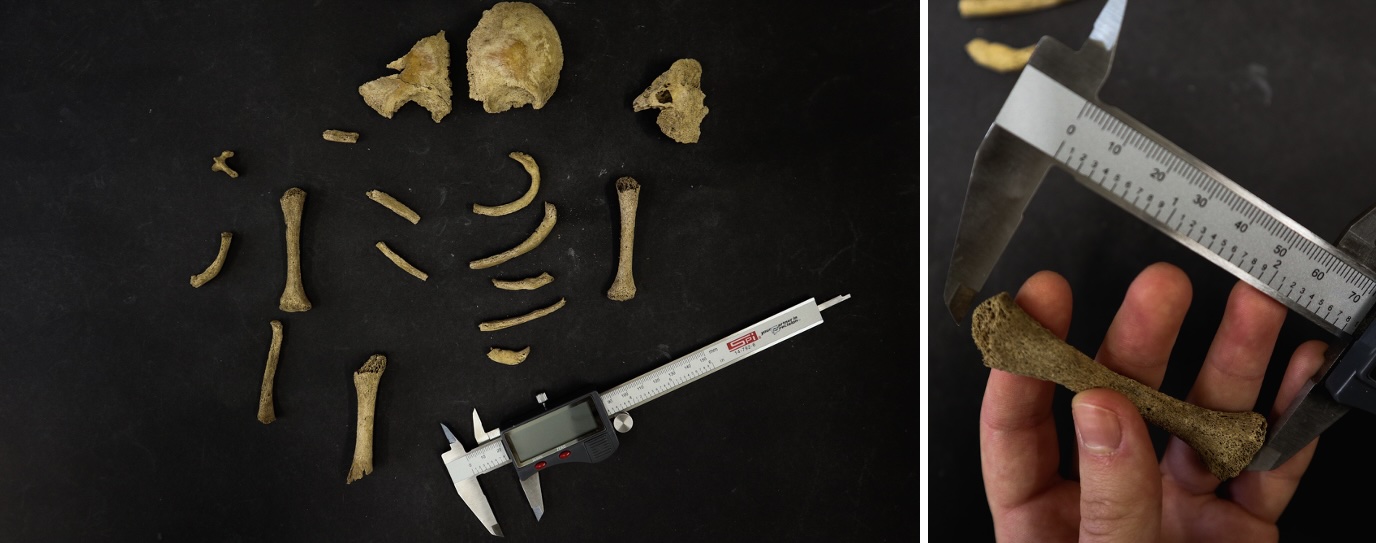
Alessandra’s multidisciplinary study investigates child diet, feeding practices, and disease in a large dataset of non-adults from medieval and early modern Estonia (13th-18th cent.). Numerous research questions regarding what medieval and early modern Estonian children usually ate, how babies were fed and weaned, as well as the links between food and diseases, will be explored.
The project will have a first part performed in Tartu University, and a second period of method learning in Stockholm University with Dr Gunilla Eriksson as supervisor. During these three years, numerous isotopic methods will be applied and tested to gain the highest resolution possible about these non-adult individuals. Combined with pathological data, a large-scale overview of child health and diet over 600 years will emerge, perhaps figuring out the long-term impact of famines, epidemics, and warfare on mothers and children.
Key Results and Interpretations
The Baltic Kindergarten project concluded with productive and promising results. In its first year, cross-sectional stable isotope analysis (SIA) and experimental intrabone sampling were used to refine the identification of breastfeeding and weaning. The tests showed that sampling metaphyses and diaphyses of growing long bones can reliably indicate childhood nutritional status, and this inexpensive screening method was published in 2025.
Access the article here: “Reconstructing infant feeding practices through stable isotope analysis: applying intrabone sampling to a medieval–early modern Estonian dataset”
In the second and third years, training (conducted in Stockholm) in incremental dentine sampling enabled high‑resolution reconstructions of childhood life histories. Around 30 individuals from rural and urban Estonian cemeteries were analysed using SIA of tooth increments. The results—currently under interpretation—strongly correlate with earlier data and allow identification of breastfeeding and weaning in most individuals, alongside evidence of stress, disease, and differences between adult survivors and non‑adult non‑survivors.
Overall, the results of this project not only expand the bioarchaeological record of medieval and early modern Estonian populations but also open new avenues for methodological development and future analyses. In particular, proteomic sex determination and paleopathological investigations using proteomics will be the next exciting steps.
Collaborative institute Stockholm University Archaeological Science Laboratory (Gunilla Eriksson, Sven Isaksson, Kerstin Lidén).
The project is funded by the Estonian Research Council, under the ETAg postdoctoral grant PUTJD1177.