


Pots and bones
Pots and bones, lipids and proteins: biomolecular archaeology for ancient dietary studies.
PI Ester Oras
Period: 01.01.2020–31.12.2024
At the Outset of the Project
Existing research in Estonia lacks comprehensive information on ancient foodways, and available evidence remains fragmented. Our project aims to significantly advance the understanding of ancient foodways by employing (a) combined multiproxy analysis of direct food-related archaeological material – pottery, human skeletal remains, faunal and botanical assemblages, and (b) testing novel cutting-edge instrumental techniques for analysing these dietary sources. For Northern Estonia, the study will deliver the most detailed biomolecular reconstruction of ancient diets to date, spanning 6,000 years from the Middle Stone Age to the Middle Ages.
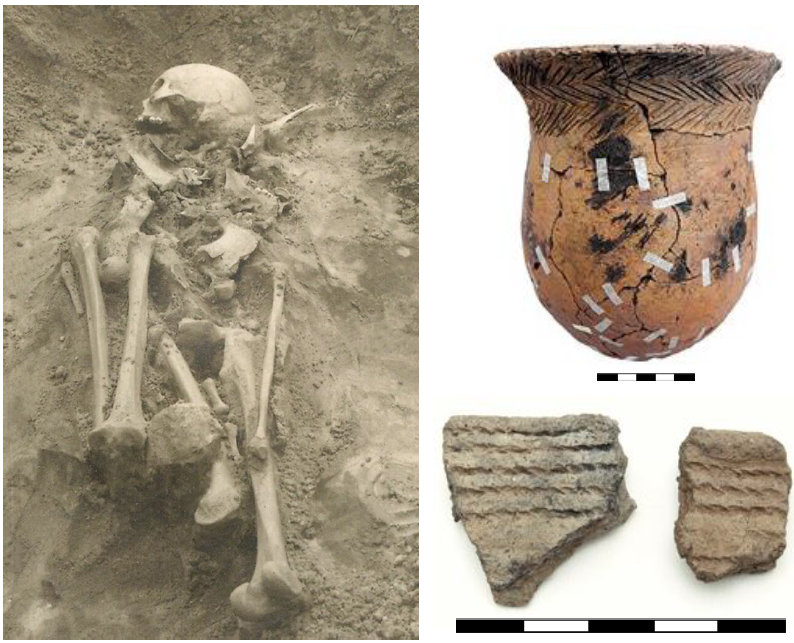
The project combines archaeology, environmental sciences, biomolecular analysis, and analytical chemistry through a multiproxy research design that analyses various archaeological materials. It tests novel instruments and develops methods for integrating diverse dietary evidence, including statistical modelling. A large sample base—over 200 pottery vessels, 100 human skeletons, and extensive faunal and plant collections—supports the creation of long-term and spatially rich dietary reconstructions. The results will be embedded within broader historical and cultural narratives and will lay the foundations for future research and teaching.
At Its Conclusion
The project demonstrated significant methodological innovations in biomolecular archaeology and provided new insights into long‑term dietary change in the Baltic–Nordic region. In addition, it led to the founding of the Archemy research group and laboratory, creating a unique interdisciplinary network at the University of Tartu that links archaeology, analytical chemistry, geology, and genomics. This development has made it the first archaeochemistry competence center on the eastern Baltic coast.

The project is funded by the Estonian Research Council, under the ETAg Start-up grant PSG492.
